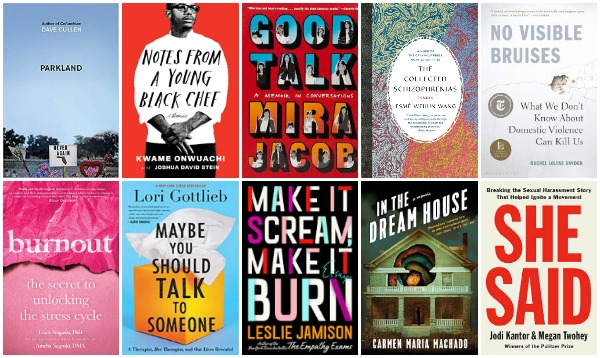
The first week of February isn’t too late for putting up a favorites of 2019 book list, right? Maybe don’t answer that one!
In any case, I couldn’t really start getting into my 2020 reading without following up my favorite fiction of 2019 with my favorite nonfiction. I read a ton of great true stories this year, so it was really hard trying to narrow it down to just 10 (which I really didn’t, there’s technically 11 on this list). I’m really excited to share all of these with you!
Parkland: Birth of a Movement by Dave Cullen
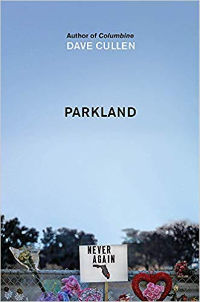 Dave Cullen is a meticulous, empathetic journalist, so I was eager to read his account of the 2018 shooting at Marjorie Stoneman Douglas High School in Parkland, Florida. What I loved about this book is that it doesn’t actually spend much time on the shooting itself and instead focuses on the work of the student activists who have emerged in the wake of the tragedy. His reporting and storytelling is impeccable, and presents a fascinating companion to Cullen’s other major book, Columbine. If you pick this one up, but sure to read through the endnotes – there’s a lot of detail there about how a good reporter works that I loved reading too.
Notes from a Young Black Chef by Kwame Onwuachi and Joshua David Stein
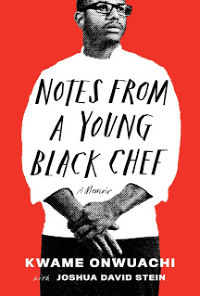 Food memoirs for the win! In this book, Kwame Onwuachi writes about how he went from being a kid in the Bronx to a celebrated chef in Washington D.C. His path took him all over, from New York to Nigeria to the Gulf of Mexico and beyond. I loved how honest he was about his choices (both good and bad), and appreciated hearing about his perspective and experiences as a black man in a largely white industry. I’ve recommended this one many times.
Good Talk by Mira Jacob
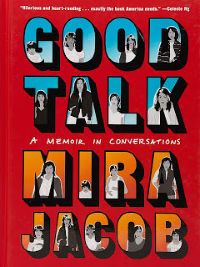 In this memoir, Mira Jacob grapples with how to answer the increasingly complicated questions about race and identity her six-year-old son started to ask in the wake of the 2016 election. Through recounting those conversations, she is able to explore “American identity, interracial families, and the realities that divide us.” It’s a heavy, but also really funny, and increasingly relevant as political divides become even more stark. I’m not sure I read a more heartbreaking or relevant book last year, which I say in the best way possible. Go read this one!
The Collected Schizophrenias by Esmé Weijun Wang
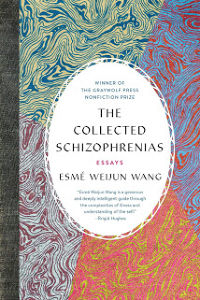 I almost always love the nonfiction that comes from Graywolf Press, and this book was no exception. This book is a collection of autobiographical essays about what it’s like to struggle with both mental illness and chronic illness. Esmé Weijun Wang begins with her initial diagnosis with a “schizoaffective disorder,” then goes on to look at arguments about labeling and diagnosis procedures, how schizophrenia manifests, and other misconceptions surrounding her diagnosis. It’s fascinating and beautifully written.
No Visible Bruises by Rachel Louise Snyder
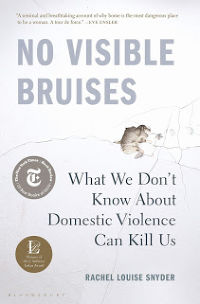 This book. Whew. Each day around the world, 137 women are killed by familial violence. And 54 percent of mass shootings in America today involve domestic violence. These statistics are at the core of the argument that journalist Rachel Louise Snyder makes in this book – domestic violence isn’t a private problem, it’s an urgent matter of public health. Snyder explores big questions about domestic violence with really precise, articulate, and confident reporting. It’s remarkable and so very important.
Burnout by Emily Nagoski and Amelia Nagoski
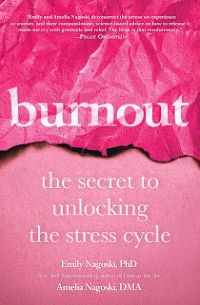 If I had to pick the book that had the biggest impact on me personally this year, it’d be this one. This spring and summer, I realized that I was experiencing many of the symptoms of burnout and needed to do something about it. This book changed my outlook, specifically looking at what stress is like for women and offering concrete steps to address it in both the short and long term. I had so many lightbulbs while reading it, which helped me start taking some specific steps to address by burnout symptoms before they got the better of me.
Maybe You Should Talk to Someone by Lori Gottlieb
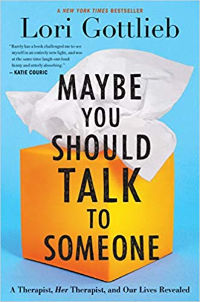 After a traumatic break-up, therapist Lori Gottlieb realized she needed some help in processing her thoughts and emotions. This book is all about therapy – what it’s like to go to therapy, what it’s like to be a therapist, and what it takes to really get the most out of therapy that you can. Gottlieb is open with her experiences, and writes about her own patients with an incredible sense of empathy. I was very moved by this book, and have recommended it to a lot of different people.
Make it Scream, Make it Burn by Leslie Jamison
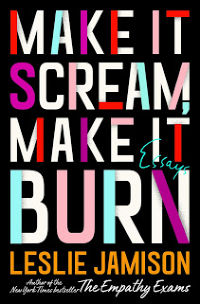 This collection of essays from one of my favorite authors covers a huge range of subjects, from children with past-life memories to a lonely whale named 52 Blue, to the author’s feelings about becoming a stepmother and a mother. I appreciate how specifically Leslie Jamison interrogates her thoughts and feelings, and how the themes of connection and privilege and perspective play into her work. She’s a really interesting thinker.
In the Dream House by Carmen Maria Machado
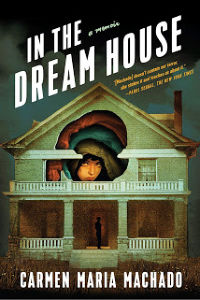 For many years, Carmen Maria Machado was part of an abusive queer relationship. In the book, she plays with format and narrative tropes to tell the story of that relationship and try to better understand queer domestic abuse more generally. I loved the way she used different storytelling techniques to see the relationship in different ways, and how each piece built on everything we’d already learned. It was utterly fascinating to read, and a book I’ve already recommended many times.
She Said by Jodi Kantor and Megan Twohey
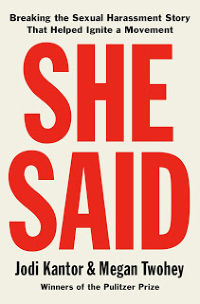 I surprised myself by reading two books about Harvey Weinstein and the #MeToo movement last year. In She Said, Jodi Kantor and Megan Twohey write about what it was like to break the story in the New York Times and explore how the subsequent reckoning affected the women who were willing to come forward. Another one I really loved was Catch and Kill by Ronan Farrow, a more personal story about his experiences reporting on this story and the shadowy ways that rich and powerful men can silence victims and those who try to expose them. I listened to this on audio and thought it was great. They’re very different books, but so closely connected in my brain it was hard to pick one over the other.
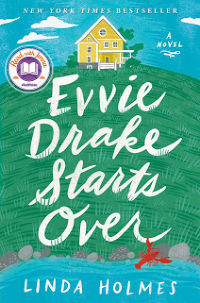 What is there to even say about this book? It was easily my favorite of the year. One year before the book begins, Evvie Drake’s husband was killed in a car crash. Since then, she’s kept mostly to herself, out of both grief over the loss and guilt over a big secret she hasn’t told anyone. To make ends meet Evvie takes on a renter, a former Major League pitcher who was forced to retire early after inexplicably losing his ability to pitch. Dean and Evvie quickly fall into a friendly routine that, slowly, grows into something more… but of course they both have secrets and ambitions and a few broken pieces they need to mend first. I have a soft spot for books about widows, complicated grief, and finding yourself after being broken, and this one hits all those notes perfectly. Linda Holmes demonstrates a real sense of warmth towards every character, and every conflict that evolves feels genuine and sincere. It’s such a delightful and warm read.
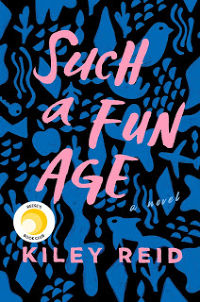 Emira Tucker is 25-years-old, about to lose her health insurance, and completely unsure of what she wants to do next with her life. Right now, she’s working as a nanny for Alix Chamberlain, a woman who has made a living getting what she wants through her lifestyle brand for young women. Late one evening, Alix calls and asks Emira to take their two-year-old daughter, Briar, out of the house for a few hours. At the grocery store near the Chamberlain’s home, Emira is confronted by a bystander and security guard who accuse the black woman of kidnapping the little girl. The incident – which is caught up tape and humiliates Emira – puts a ticking time bomb in the middle of Emira and Alix’s relationship. I loved everything about this book, but especially how the entire book is essentially a slow motion car crash that ends up landing in a way I didn’t expect at all. I snuck this book in right at the end of 2019, but I’m sure it’s going to be on many, many best of lists come 2020 since it was published on December 31. (Thanks to
 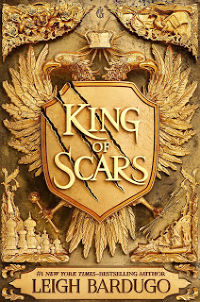 Leigh Bardugo is one of my favorite writers, and this latest entry into her extended Grishverse is amazing. It focuses on Nikolai Lantsov and his efforts to rebuild Ravka after the events of both The Grisha Trilogy and Six of Crows Duology. I won’t say too much more about it – I think you do need to read the previous books to appreciate this one – other than that I think it’s totally work out. Bardugo is getting better with every book she writes – a more assured grasp of her characters, more ambiguous and challenging conflicts, and more sophisticated conclusions. I can’t wait for the second book of this duology.
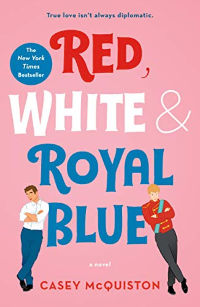 I stayed up well past my bedtime tearing through this book. It’s a fun, charming, and deeply romantic story about the secret romance between the First Son of the United States and the Prince of Wales. As I was reading, I felt like the book was a mash-up of a bunch of different current events stories, but with an underlying feeling of hope that progress is still possible. Then in the acknowledgements, author Casey McQuiston said almost exactly that, describing the book as a “tongue-in-cheek parallel universe” that’s also “escapist, trauma-soothing, alternate-but-realistic reality… one still believably fucked up, just a little better, a little more optimistic.” It’s a really sweet book, perfect for reading in the summer when I picked it up.
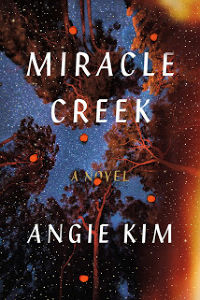 This book literally opens with a bang, when an experimental medical treatment device known as the Miracle Submarine explodes while patients are inside, killing a young woman and an autistic boy. After setting the stage, the book is structured like a courtroom thriller, following the four-day trial of the boy’s mother, accused of deliberately setting the fire that caused the explosion in order to escape caring for her son. I love a good genre book like a thriller for the relentless plotting, but also appreciated how Angie Kim was able to deftly and thoughtfully take on more thorny issues like immigration, family, and parenting special needs kids without ever losing the thread of the story. The pacing of this book is also so great. Details about the events leading up to the explosion were doled out in perfect intervals, with a ton of secrets and cascading events that were both tightly-plotted and kept me guessing until the very end.
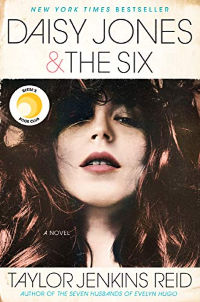 This may have been the most-hyped book of the year, and I was so glad it lived up to all those expectations! The book is structured as an oral history of a legendary 1970s rock band, chronicling how the came together, made an epic album, then split up without a public word after a concert at Chicago Stadium in 1972. It’s about rock and roll, creativity, family, gender, and so much more. Taylor Jenkins Reid writes so confidently, you can tell she knows exactly what this book is from the very first sentence of the “Author’s Note” that it opens with. The way she plays characters off one another via the oral history format is so fun, it just delighted me from beginning to end. I read this one in a couple of sittings, it was just so great.
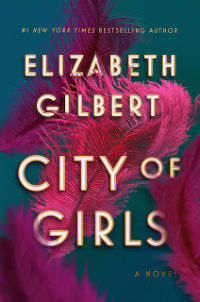 Over the Fourth of July long weekend I wanted something light and bubbly and charming to escape into, and this book provided exactly that experience. The story centers around Vivian Morris, an 89-year-old woman looking back on her early 20s as part of the exotic and glamorous world of the New York City theater in the 1940s. After being kicked out of Vassar College, Vivian goes to live with her eccentric, theater-owning Aunt Peg, who welcomes her into that world. But eventually Vivian makes a personal mistake that puts her career and the theater in jeopardy, a decision it takes her decades to understand. I loved the way this book explored love and sexuality, and the totally unapologetic way Vivian told her story. It was the perfect balance of smart and sparkly for a vacation read.
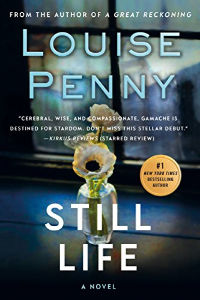 I read a lot of mysteries and literary thrillers this year, but this one was easily my favorite. It’s the first book in Louise Penny’s long-running Chief Inspector Gamache series, which all take place in the small Canadian town of Three Pines. In this one, an older woman named Jane Neal is found dead in the woods, killed by an arrow that may have been from a distracted hunter… or may have been murder. Neal was well-loved, but also a bit reclusive, and so her home and art may provide clues to whether someone wanted her dead. I loved meeting Gamache and his staff, and I’m excited to have a new series to look forward to reading.<
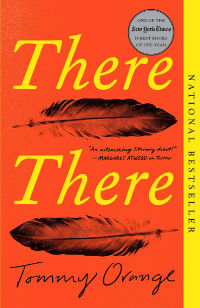 This book follows the stories of twelve characters from Native communities who are all on their way to the Big Oakdale Powwow for different reasons. They’re also all connected, although how those relationships and stories overlap managed to entirely surprise me. Through those different voices, Tommy Orange is able to illustrate what it’s like to be an urban Native American and how that connects to the broader history of Native people in the United States. This is a book I loved reading, but know that I didn’t totally understand or appreciate because there is so much smart stuff going on with every page. But don’t let that turn you off – it’s absolutely a page-turner where you can see a crash coming and have to know how you’re going to get there.
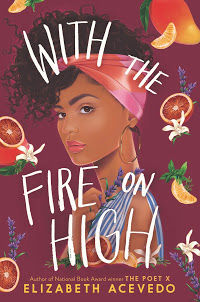 As a high school freshman, Emoni Santiago got pregnant and gave birth to a little girl. At the beginning of her senior year, Emoni is trying to do what she can to support her daughter and her abuela, all while trying to figure out what her future might hold. The place she feels most comfortable is the kitchen, and she quietly dreams of becoming a professional chef. When her high school finally offers a culinary arts class, Emoni signs up – a decision that will help shape what she decides to do next in all areas of her life. I loved so much about this book and watching Emoni find herself as a young woman with talent, drive, and heavy responsibilities. There is a romance in this book that’s very charming, but it’s a satisfying book because that relationship is never what defines Emoni or her story. It’s a book about a young woman finding her passion and finding a way to make decisions that define her own life, which resonated a lot with me. This was my very last read of 2019, and it was such a great story to end the year with.
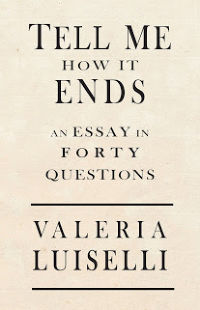 Tell Me How it Ends by Valeria Luiselli
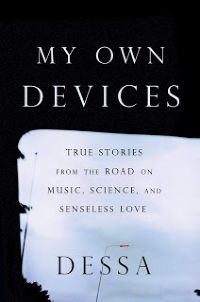 My Own Devices by Dessa